
Comparison: Best Master Nursery Fish Emulsion (Updated | Jan 15th)
If you’re looking to give your garden a natural boost, you’ve probably heard about fish emulsion—but not all formulas are created equal. We put the most popular option, Master Nursery Fish Emulsion, to the test to see if it lives up to the hype. From nutrient content to ease of use, we’re breaking down what really matters so you can make an informed choice. Whether you’re a seasoned gardener or just starting out, finding the right fertilizer can make all the difference. Let’s dive in and see what makes this product stand out—or fall short.
- Best for compact organic power: Master Nursery Fish Emulsion 4-1-1 Organic Plant Food – qt
- Best for bulk growth boost: Master Nursery 4-1-1 N/A UT Fish Emulsion
- Best for mini green boost: Master Nursery 4-1-1 N/A UT Fish Emulsion
Product Comparison: Best Master Nursery Fish Emulsion
Master Nursery Fish Emulsion 4-1-1 Organic Plant Food – qt

- Master Nursery Fish Emulsion 4-1-1 Organic Plant Food – qt
- Fish Emulsion is an organic plant food with kelp, which helps plants grow, flower, fruit, and stay deep green. It contains ocean going fish nitrogen for green color and top growth; phosphate for root growth and fruit and flower production; and potash for plant hardiness and disease resistance.
Master Nursery 4-1-1 N/A UT Fish Emulsion, 1 gallon
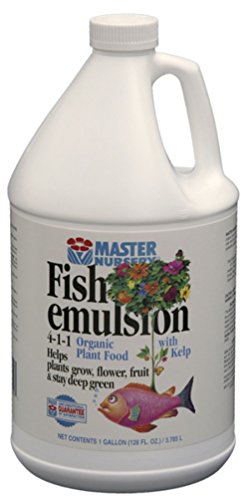
- Organic plant food with Kelp helps plants grow, flower, fruit and stay deep green
- Contains ocean going fish, nitrogen for green color and top growth, phosphate for root growth, fruit and flower production and potash for plant hardiness and disease resistance
- Active Ingredients: Whole Fish; Fish Scraps; Kelp
Master Nursery 4-1-1 N/A UT Fish Emulsion, 1 quart

- Organic plant food with Kelp helps plants grow, flower, fruit and stay deep green
- Contains ocean going fish, nitrogen for green color and top growth, phosphate for root growth, fruit and flower production and potash for plant hardiness and disease resistance
- Not Available in UT
Product prices and availability are accurate as of the date/time indicated and are subject to change. Any price and availability information displayed on Amazon.com at the time of purchase will apply to the purchase of this product.
Buying Guide
FAQs
What are the key differences between the quart and gallon versions of Master Nursery 4-1-1 Fish Emulsion?
Both sizes contain the same 4-1-1 nutrient ratio (nitrogen‑phosphate‑potash) and kelp blend, but the gallon provides eight times the volume of the quart. The larger container typically offers a lower cost per ounce, making it more economical for frequent growers, while the quart is convenient for occasional use or limited storage space.
Is the formulation identical across the quart and gallon bottles?
Yes, the ingredient list—whole fish, fish scraps, and kelp—is the same in each package, delivering consistent nutrient content. The only variation is the packaging size; the concentration of nutrients per fluid ounce does not change.
One of the quart listings notes “Not Available in UT”—how does that affect my purchase?
The “Not Available in UT” label means the product cannot be shipped to Utah due to state regulations on certain organic fertilizers. If you reside in Utah, you’ll need to choose the gallon size, which is not restricted, or look for an alternative fish emulsion that complies with local rules.
What role does kelp play in Master Nursery Fish Emulsion?
Kelp adds a suite of micronutrients, hormones, and trace minerals that boost root development and improve overall plant vigor. It also helps plants tolerate stress and enhances the uptake of the primary N‑P‑K nutrients provided by the fish emulsion.
How should I apply Master Nursery 4-1-1 Fish Emulsion for optimal results?
Dilute the emulsion according to the label—typically 1 tablespoon per gallon of water for vegetative growth and 2 tablespoons for flowering or fruiting stages. Apply the solution every 2‑3 weeks, watering the soil thoroughly to ensure even distribution of nutrients.
Is Master Nursery Fish Emulsion certified organic?
The product is marketed as an organic plant food and is made from whole fish, fish scraps, and kelp, which are natural, non‑synthetic sources. While it meets the ingredient criteria for organic standards, buyers should verify any specific certification logos on the packaging if that is a requirement for their gardening program.
How can I determine which size offers the best value for my garden?
Calculate the price per fluid ounce or per recommended application dose; the gallon usually provides a lower price per unit of nutrient. Consider how often you fertilize—if you garden year‑round, the larger container reduces refill frequency and overall cost, whereas a quart may be more cost‑effective for small container gardens or trial use.